The Credibility Trap
Heritage brands spend decades trying to earning the right press placements. Then they slowly realise the press isn’t what’s truly moving the culture anymore.
On the morning of Saturday 16 May, queues started forming outside Swatch stores in Dubai, London, Paris, Chicago, New York, Singapore and Kuala Lumpur. By the time stores opened if they even managed to open at all, the Police were dispatched fairly soon after opening.
Stores in Dubai, the UK, France and across the US were forced to cancel the launch for public safety. It was quite the achievement for a £300 pocket watch.
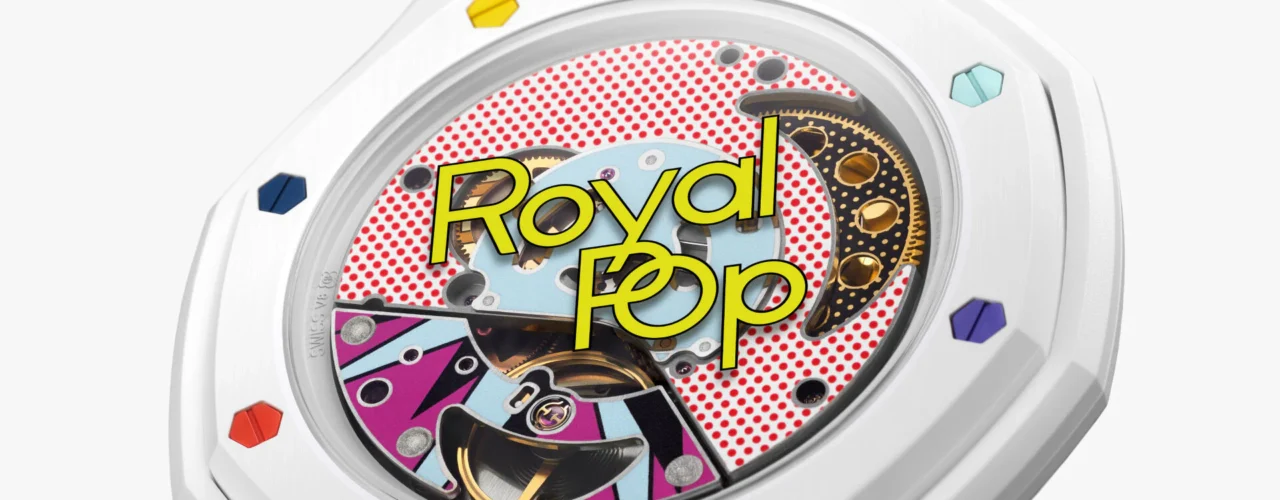
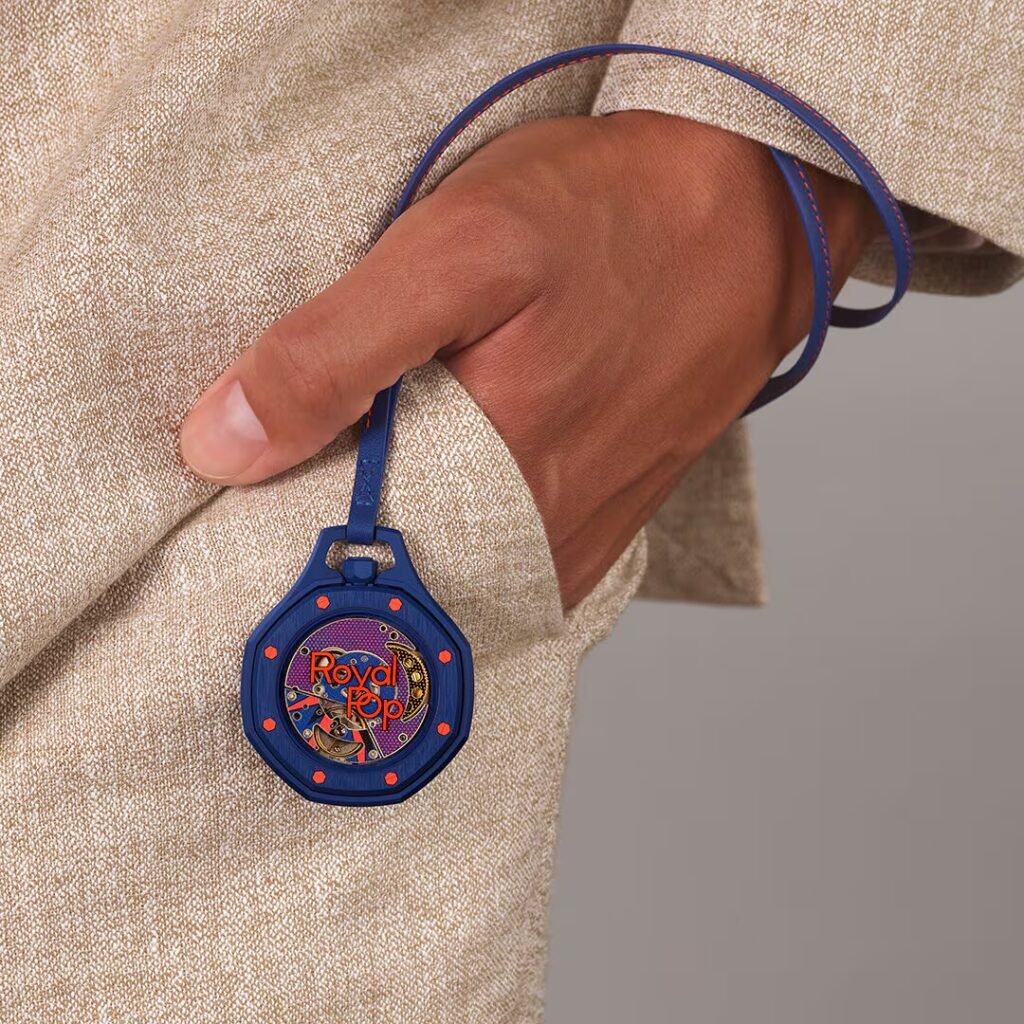
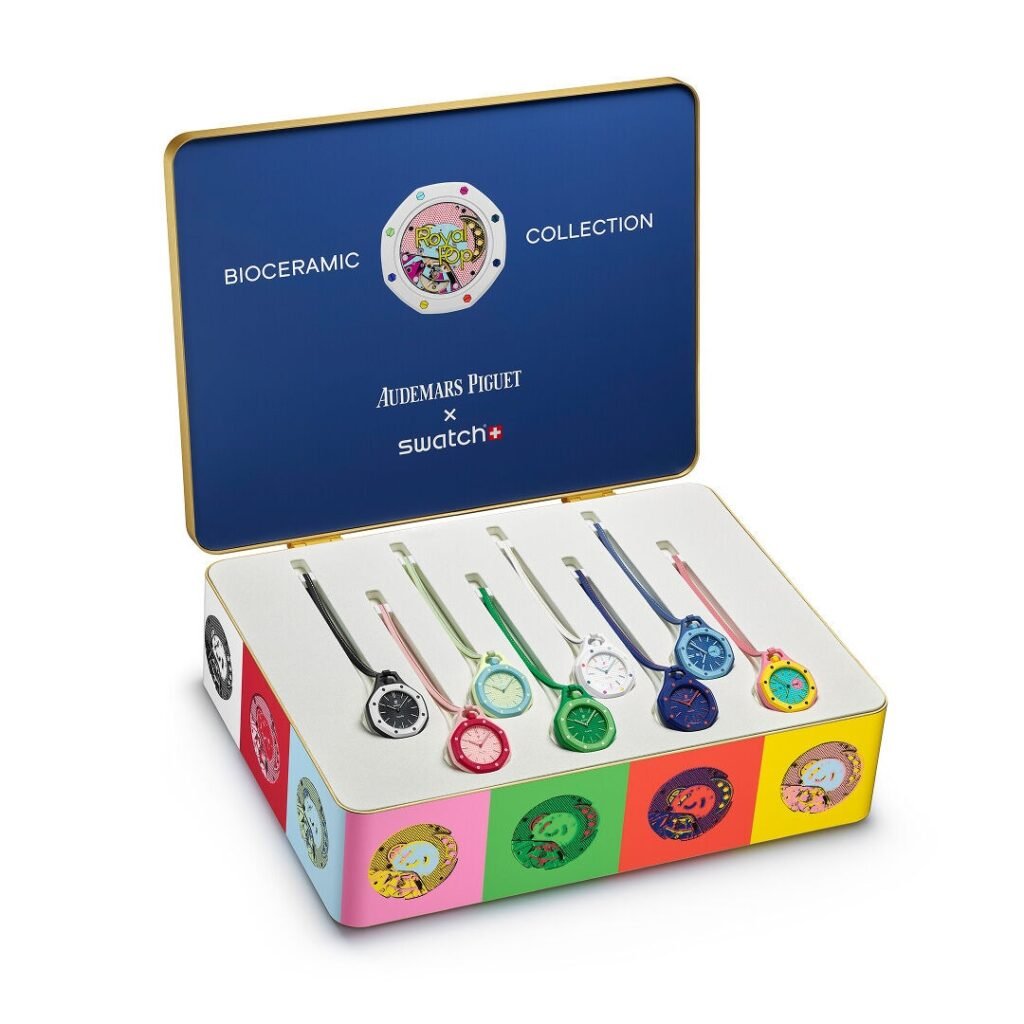
The Audemars Piguet × Swatch “Royal Pop” collaboration featured eight colourways of a Sistem51-powered pocket watch. It was a reimagination of the AP’s Royal Oak design. It quickly became one of the most anticipated and hotly discussed launches of the year.
So it was no surprise that within hours it was being listed on Chrono24 and eBay for over thousands. I’m also sure the Swatch Group board were happy the 15% share rise in the weeks leading up to the launch too.
(Praise be to the shareholders.)
Then we also have the reaction from the watch collector community; brace yourselves.
Sections of the community were quick to declare the collaboration was a betrayal. Audemars Piguet had metaphorically availed itself of a double cheeseburger from McDonald’s and had cheapened itself. It had sacrificed the exclusivity of the Royal Oak.
The reaction split cleanly along the line that every heritage and luxury brand will have to confront. On one side the institutional press and long standing connoisseurs and collectors. The kinds of people who spent years professing Audemars Piguet as one the heights expression of haute horlogerie or ‘horology’ for my non French speakers. Then on the other side a culture of curiosity, much younger and less learned in the ways of horology. They don’t wait for validation from the established figures, they instinctively know when something looks cool and feels like a ‘vibe’.
Today we’re going to explore the credibility trap, through the lens of the AP × Swatch reaction. As this is one of the clearest case studies of it in years.


What editorial credibility actually buys you:
For most of the last century, heritage brands operated under a stable set of assumptions.
1. Build something extraordinary.
2. Earn the recognition of the right publications, collectors and institutions.
That recognition would then compound into pricing power, waiting lists, and the kind of brand strength that withstands recessions and trend cycles.
The press validated the brand and the brand proudly paraded the validation The system was straightforward and it worked.
To a certain extent, the system still works. Credibility from publications is still valuable and signals quality to a section of the audience. It gives a brand cultural insurance, and creates the perception of timelessness, that luxury brands depends on.
Hodinkee, WatchTime, Monocle, Wallpaper, Financial Times and The New York Times these are some of the publications of choice for the watch world; and for many other heritage and luxury brands.
A rand that earns a placement from them, earns highly prized cultural cache.
However, editorial credibility has quietly become a trailing indicator rather than a leading one.
By the time you’re deemed worthy enough of a feature, the validation is inconsequential. Typically detailing your past and how you’ve been received by the people who already know your category.
Given their incumbent status, rarely do these publications appeal to those who will buy your product in ten years. They’re not natives to the platforms and spaces where younger and uninitiated audiences live and neither do they carry the same cultural weight that might be enlightening for your connoisseurs and existing collectors.
This is the crux of the issue.
The press a heritage brand grew with is no longer the press that decides whether the brand has a future.
The founders, the boards and the marketing directors of these brands often cannot see this clearly, because the press that validated them is the press they read, the press they trust and the press they probably identify with most. Editorial credibility from these traditional publications have become a mirror rather than a window.


The Fury and what it reveals
The collector reaction to AP × Swatch is worth assessing carefully, because it is the manifestation of an invisible struggle that runs through every product category with a similar credibility structure.
The complaints fell into three recognisable patterns:
The first was the dilution argument.
“This cheapens the brand.” “Once people associate AP with $400, they will think $40,000 is insane.”
This is the orthodox luxury position, any expansion downwards erodes the value position at the top. It has been the dominant argument inside watch collecting for forty years and has shaped most of the industry’s approach to entry level products.
The second was a more cultural objection.
Framed as connoisseurship but functioning, in practice, as gatekeeping.
“This is not for collectors. It is for people who don’t deserve access.” “It is for the people who don’t know the history, the references and the codes.”
Several collectors interviewed by Robb Report noted the sinister language patterns underneath this, particularly the way the same arguments had been deployed, with very different spirited passions, when AP first started appearing on Black athletes and entertainers during the late 2000s and 2010s. The “this isn’t for real collectors” argument has a long and uncomfortable history.
The third was the strategic objection.
This is the most interesting one.
“Why would AP do this?” “The waiting lists are already years long.” “The brand does not need new customers. It needs to protect the existing ones.”
This argument may seem internally coherent, but it’s also thankfully wrong.
Brands that look healthy because of their waiting lists are often the most vulnerable, because the waiting list audience is finite, aging, and culturally narrow.
The ‘MoonSwatch’ Omega’s earlier internal collaboration with Swatch offers a perfect counter argument and proof point. Omega’s Speedmaster sales rose meaningfully after the MoonSwatch launch. The accessible version did not cannibalise the luxury version. It created future luxury customers and exposed them a new generation of customers to the heritage story of the Speedmaster, as the first Omega watch in space.
What the fury actually revealed was the gap between the brand’s existing validation system and its future audience. The institutional press, by and large, was sceptical. The cultural reaction the queues, the chaos, the resale prices and the share price jump was undeniable. (Praise be to the shareholders)
The two readings did not agree. The Swatch Group likely for the first time in decades, had to choose which form of credibility and validation to take more seriously.
The Opportunities on the other side:
The credibility trap exists because the costs of divesting away from traditional editorial credibility are immediate, whereas the benefits are not yet known.
Not to mention the relationships and the press may turn on you. It only be partial or temporary but there’s often backlash or negative soundings when you try to broaden your appeal.
The journalists who certified you may frame your new moves as a fall from grace. Which might feel emotionally bruising for the founders and creative directors who have spent their careers building the brand to win press validation.
However:
The benefits, when do they materialise, look like this:
1. Cultural relevance compounds faster than editorial credibility.
A single moment that crosses into the broader culture, think a queue, a chaos, a meme or a worn by an influencer or celebrity; does in days, what gradual editorial features takes years to do.
The MoonSwatch made Omega culturally legible to a generation of consumers who had no functional relationship with the brand. Five years later, those consumers are buying Speedmasters. The cultural moment was the entry point. The eligibility for credibility and validation, which had been there all along, allowing for more people to discover the brand and the Speedmaster.
2. Younger audiences validate brands through different signals.
The audience that decides whether a heritage brand has a future in 2035 is not reading Hodinkee. They are watching a creator’s review on TikTok, following the brand’s collaborations on Instagram, encountering it through cultural figures they already follow.
None of this replaces the prestige of editorial credibility, but a brand whose only validation lives inside trade publications risks invisibility to broader audience entirely.
3. Pricing power is downstream of cultural relevance, not just craft.
This is the part that traditional luxury thinking gets wrong most often. Pricing power is not produced solely by exclusivity, scarcity, and editorial recognition.
It is also produced by desire and this is increasingly shaped by the broader culture, rather than by the connoisseur class.
A brand that is exquisitely made but culturally absent will, eventually, lose pricing power to a brand that is ‘acceptably’ well made and culturally vivid.
4. The brand becomes legible to cultural tastemakers.
Creative directors, photographers, stylists, collaborators, athletes and select influencers are a core part of how a brand is presented. They’re also an integral part of the broader culture.
A brand with editorial credibility but no cultural reach struggles to attract tastemakers. The brands that broaden their appeal do so not just for the consumer but also to ensure their place and position within the cultural zeitgeist.


What the pros and cons actally look like in practice:
The case for broader appeal:
Cultural relevance
Future-customer pipeline,
Talent & Tastemaker magnetism
Share-of-conversation,
Defensibility against more agile competitors,
The MoonSwatch model was a low-priced, accessible expression of the brand that creates entry points without replacing the high-end product. It has proven durable for Omega and is now being tested with Audemars Piguet.
The case for staying safe:
Protected pricing
Stable identity,
Less risk of misjudgment,
deeper relationships with existing customers,
lower vulnerability to the volatility of broader cultural moments.
Patek Philippe, which has resisted almost every move toward broader appeal that Audemars Piguet and Omega have made, remains arguably the most valuable independent watchmaker in the world. The strategy works but the success of it is now declining over time.
The question is not “which strategy is correct.” It is “which strategy is correct for this brand, at this moment and with this audience.
Most heritage brands, when they answer this question, default to the safer path, opting to protect the existing positioning and avoid the risk.
The brands that take the harder path are not all heroes. Some of them get it wrong too. Equally, the brands that never take the harder path are not safer in the long term either. They’re risking quietly becoming invisible.
Diagnostics Tool:
If you stopped doing all editorial outreach for a year, (No press releases, no exclusives and no embargoed launches) would your brand still be culturally legible to a 25-year-old? If yes, you have built something real. If no, your brand exists inside a publication system, not inside a culture.
The Structural Mistake
The mistake heritage brands make is not in protecting editorial credibility. It is in treating editorial credibility as a substitute for cultural presence rather than a complement to it. The two are not interchangeable. They serve different functions, reach different audiences, and validate brands in different registers.
The healthiest heritage brands operate in both systems at once. Patek Philippe has for now chosen to operate almost exclusively in one. Audemars Piguet has just made the most visible move in years toward operating in both.
Whether the move succeeds depends not on the watch itself, but on whether the brand can hold both registers without one collapsing into the other.
This is the harder strategic question, and it is rarely asked in the rooms where these decisions are made. The room asks “should we do this collaboration?” or “should we partner with this creator?” or “should we appear at this cultural moment?”
The room rarely asks the deeper question, which is: does our brand currently know how to operate in two registers at once, and if not, what would it take to learn?