
Man vs Machine
A guide to making ‘Technical Innovation & Procesess’ feel and sound more ‘Human’ on social and in campaigns.
The brands making the most interesting things, are often some of the worst at talking about how they make them.
Here’s how to change that:
You’ve seen it before:
A brand with genuinely groundbreaking technology: 3D printed eyewear, sustainable fabrics, laser cut & etc.
However like most brands, they play it safe and is generic product shots and lifestyle imagery. The innovation that makes them special is buried in a their website or considered too confusing.
Regrettably, most brand don’t know how to talk about innovation; without it sounding like a technical manual or an investor pitch.
The result is they’re leaving one of their biggest differentiator on the table.


The gap
When you’re too close to the process, everything feels obvious and taken for granted. Conversely, to an audience scrolling past, that 3D printing technique or that proprietary fabric blend feels either invisible, irrelevant or too complex.
The challenge is substantial:
how do you explain complex manufacturing, supply chain innovations, or technical partnerships in a way that feels exciting, and not exhausting?
The solution: Humanise it.
The brands that get this right don’t lecture. They find a way to invite people in and relate.


1. Show the problem your innovation solves, then reveal how your innovation fixes it.
Don’t start with the technology, instead start with the frustration. E.g. “Glasses that never quite fit right.” Or “Outdoor gear that wets out after an hour.”
Remember the audience cares about the outcome more and not necessarily the solution process. So focus on illustrating and establishing the need for a better outcome.
Then sell your process and innovation as core to what makes the desired outcome possible. The aim is to make the audience appreciate you for creating the resolution that they desired.
2. Use visuals that reveal, not just the content assets you have to hand.
A close‑up of a 3D printer laying down layers. A side‑by‑side of traditional manufacturing vs. yours. A timelapse of a product being made. Stress testing and quality assurance assessments.
You don’t always need the complexity of a documentary to help people understand.
Sometimes just 15 seconds of showing, not telling can go a long way.
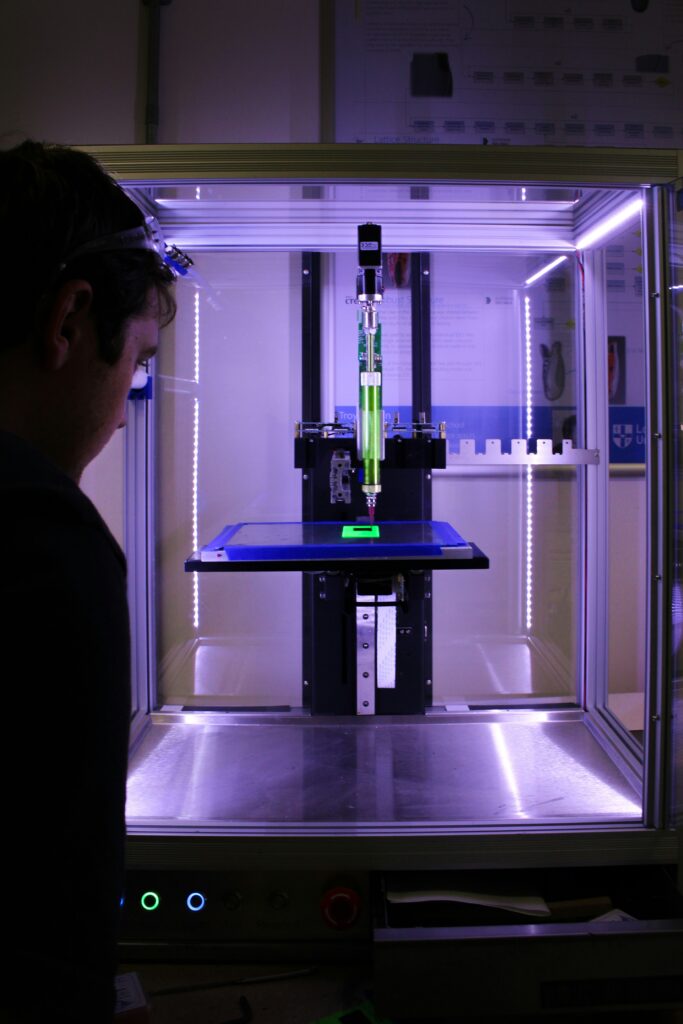



3. Find the human story inside the technology.
Try exploring some of the following kinds of angles:
– Reveal and spotlight who figured managed it out?
– What problem were they trying to solve?
– What failed before it worked?
– Was there trip or moment that unlocked the insight needed?
– What do you hope to do next to refine the process further?
Innovation is inherently a dramatic process full of setbacks, breakthroughs and late nights. That’s content people actually want to watch, don’t hide it away.
4. Translate technical terms into benefits.
Use the feeling of complexity as a signal for refinement and reframing.
For example,‘Selective laser sintering’ becomes “we build your glasses layer by layer, so every curve is exactly right.”. Equally, ‘NFC tag traceability” can become “you can scan this tag and see exactly where your jacket was made.”
The key is not to dumb it down completely, instead find ways of translate it so it feels more accessible, functional or beneficial.
5. Invest Long Term Storytelling
Create a recurring formats to educate your audience. Some innovations can take longer than others to be appreciated in it’s entirety.
Also it’s beneficial to weave educational content piece into your long term content plans, to avoid them feeling like random outliers.
Explore how you can produce your own ‘How It’s Made’ or ‘Tech Talk’ in a way that feels right for your brand.
When you make innovation a regular part of your content calendar, it stops feeling like a heavy lift and grows to become part of your brand voice.